
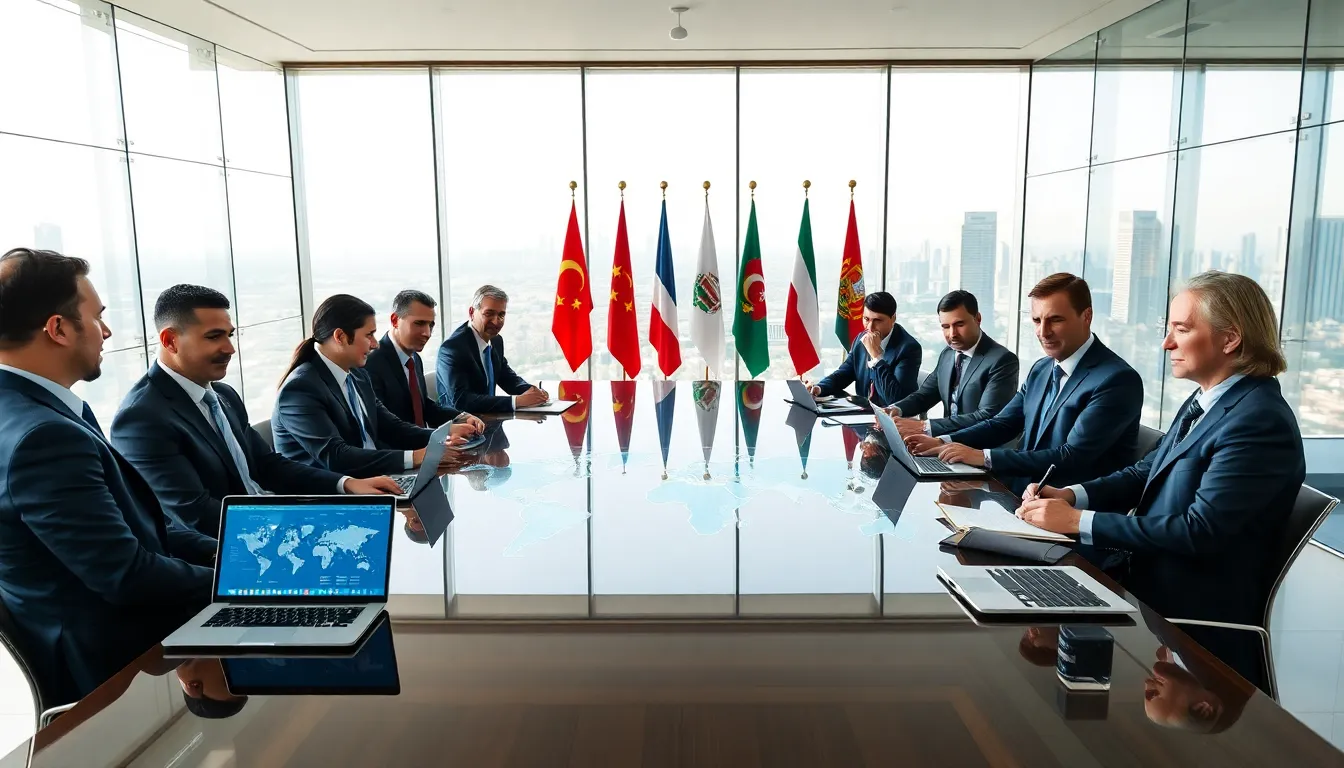
Global affairs examples reveal how nations interact, compete, and cooperate on the world stage. These events shape economies, influence policies, and affect billions of lives. From trade agreements to climate summits, global affairs touch every corner of modern life.
Understanding these examples helps citizens, students, and professionals grasp why certain events matter. This article explores key global affairs examples across politics, economics, environment, and humanitarian efforts. Each section highlights real-world events that define international relations today.
Table of Contents
ToggleKey Takeaways
- Global affairs examples span politics, economics, climate, and humanitarian efforts—showing how interconnected modern nations have become.
- Major political events like the Russia-Ukraine conflict, U.S.-China tensions, and Brexit continue to reshape international alliances and security.
- Economic global affairs examples, including trade wars and sanctions, demonstrate how financial decisions cross borders and affect supply chains worldwide.
- The Paris Agreement and annual COP summits represent critical environmental global affairs examples where nations negotiate binding climate commitments.
- Humanitarian crises—from the Syrian refugee situation to COVID-19 response—reveal both the challenges and cooperation involved in global affairs.
- Understanding global affairs examples helps citizens, students, and professionals recognize why international events directly impact their daily lives.
What Are Global Affairs?
Global affairs refer to events, policies, and relationships that cross national borders. They include diplomacy, trade, security, and international law. Countries, organizations, and individuals all play roles in shaping global affairs.
The United Nations, World Trade Organization, and NATO represent key institutions in global affairs. These bodies create frameworks for cooperation and conflict resolution. They also set standards that nations agree to follow.
Global affairs examples range from peace treaties to economic sanctions. They include climate agreements, military alliances, and humanitarian missions. Each example shows how interconnected modern nations have become.
Media coverage brings global affairs into homes worldwide. A trade dispute between major economies affects stock markets everywhere. A refugee crisis in one region draws responses from countries thousands of miles away. These connections make global affairs relevant to everyone.
Political and Diplomatic Examples
Political global affairs examples dominate headlines regularly. The Russia-Ukraine conflict, which began in 2022, reshaped European security. NATO expanded its eastern presence, and Western nations imposed unprecedented sanctions on Russia.
U.S.-China relations offer another major example. Trade tensions, technology restrictions, and Taiwan’s status create ongoing diplomatic challenges. Both nations compete for influence in Asia, Africa, and Latin America.
The Abraham Accords of 2020 normalized relations between Israel and several Arab nations. Bahrain, the UAE, Morocco, and Sudan established diplomatic ties with Israel. This shift altered Middle Eastern politics significantly.
Brexit serves as a European global affairs example. The United Kingdom’s departure from the European Union in 2020 changed trade rules, immigration policies, and political alliances. Its effects continue to unfold years later.
Diplomatic summits also shape global affairs. The G7 and G20 meetings bring leaders together to address shared challenges. These gatherings produce agreements on everything from tax policy to pandemic response.
Economic and Trade Relations
Economic global affairs examples show how money moves across borders. The U.S.-China trade war that started in 2018 imposed tariffs on hundreds of billions in goods. Both economies felt the impact, and global supply chains shifted in response.
The Regional Comprehensive Economic Partnership (RCEP) represents the world’s largest trade bloc. Fifteen Asia-Pacific nations signed this agreement in 2020. It covers nearly one-third of global GDP.
Sanctions serve as economic tools in global affairs. Western nations froze Russian assets and restricted banking access after 2022. Iran faces similar restrictions over its nuclear program. These measures show how economics and politics intertwine.
Currency policies affect global affairs too. China’s yuan internationalization efforts challenge the dollar’s dominance. Central banks coordinate during crises, as they did during the 2008 financial collapse and the COVID-19 pandemic.
Supply chain disruptions became visible global affairs examples during 2020-2022. Semiconductor shortages halted car production worldwide. Shipping delays raised prices on consumer goods. These events showed how dependent nations are on each other.
Climate Change and Environmental Cooperation
Environmental global affairs examples have gained urgency in recent years. The Paris Agreement of 2015 united 196 nations around climate goals. Countries pledged to limit global warming to 1.5 degrees Celsius above pre-industrial levels.
COP summits occur annually and produce new commitments. COP28 in Dubai during 2023 addressed fossil fuel transitions and climate finance. These meetings show global affairs in action as nations negotiate binding targets.
Deforestation in the Amazon affects global affairs. Brazil’s policies draw international attention and criticism. European nations have threatened trade consequences over environmental destruction.
Ocean governance represents another area of environmental global affairs. Nations negotiate fishing rights, pollution standards, and protected zones. The High Seas Treaty of 2023 created a framework for protecting international waters.
Climate finance flows between nations as part of global affairs. Wealthy countries pledged $100 billion annually to help developing nations adapt. Debates over these funds continue at every international climate meeting.
Humanitarian Crises and International Response
Humanitarian global affairs examples reveal both tragedy and cooperation. The Syrian refugee crisis displaced millions across Europe and the Middle East. Host countries like Turkey, Lebanon, and Jordan absorbed massive populations.
The Afghanistan situation after 2021 created urgent humanitarian needs. International organizations scrambled to deliver aid under Taliban rule. Women’s rights became a focal point of global concern.
Food insecurity in East Africa draws international response. The World Food Programme coordinates relief efforts across multiple countries. Droughts, conflicts, and economic shocks combine to create persistent crises.
Global affairs examples include pandemic response. COVID-19 required unprecedented international coordination. COVAX attempted to distribute vaccines equitably, though wealthy nations received doses first.
Refugee policies vary widely across nations. Some countries welcome asylum seekers: others close borders. The global compact on refugees seeks common standards, but implementation remains uneven. These differences highlight how global affairs play out differently in each nation.


